

Jason Gale is a senior Editor at Bloomberg News. He’s the author of the recently-released After Covid: The Health Impacts That Will Last Generations, a comprehensive look at how the Covid-19 pandemic unfolded, and the myriad issues we still face from it. I wanted to talk to him about why we as a society are still in denial of the Covid’s effects, including the effects it’s still having on millions of people’s bodies and brains.
[This interview has been edited and condensed]
Can you tell me a bit about why you wanted to write this book? It feels like mainstream discourse has totally moved on from Covid. Was there a gap in that discourse you wanted to fill?
I thought that there was definitely room to write a book that tried to trace how the pandemic unraveled, and its continuing consequences. And one of the reasons was that I could see that our memories and recollections of the event—which is in many ways still ongoing—are very prone to suggestion and manipulation and alternative narratives. So I really wanted to try to create a fairly honest, truthful record of what happened.
Do you feel like most people have memory-holed the pandemic and never think about it now?
I think that part of our resilience strategy is to put bad things behind us and move on. So I think it’s very understandable that we want to forget what happened and almost, in a way, make light of it. But it’s harder to do that in some places. If you’re in New York, you probably remember the morgue trucks parked on streets outside hospitals, the mass graves being dug on Hart Island off the Bronx. Some of those things were highly traumatic.
But I also think part of the reason it’s hard for some people to remember is that, as you write in your book, our memories of the pandemic can be used for different political goals, or manipulated.
Absolutely. I’ve seen a number of physicians and nurses on social media recently talking about how, really, there were no overwhelmed hospitals during the height of the pandemic. That that wasn’t happening. But that’s because the pandemic hit different places differently. Hospitals were overwhelmed in New York City and Boston and San Francisco and Los Angeles, but not everywhere. And that’s partially because our mitigation strategies were working. We have to remember there were certain measures put in place designed to prevent all hospitals from being overwhelmed. So that was kind of a success if your hospital wasn’t overwhelmed with Covid patients. But that’s being used now to claim that the pandemic was completely overblown and exaggerated, which I don’t think is correct.
There’s also debate about whether we’re still actually in a pandemic or not, right?
It’s interesting when you ask about whether the pandemic is ongoing. And there are certainly people who look back and think: well, in 2023 the World Health Organization and the U.S. government and other governments said that the emergency phase of the pandemic was over. That occurred in May 2023. But we know that SARS-CoV-2 is still evolving, still infecting people, still causing chronic illness and even deaths all around the world. So from that basis, the pandemic is still going.
I think that there is a debate going on about whether the pandemic is over or not. And I certainly see Covid-cautious people, especially people who have Long Covid who are very vulnerable to infection, being very frustrated at the lack of acknowledgement that SARS-CoV-2 is still circulating and evolving in societies.
When you talk to to scientists and researchers, were you surprised about just how many effects are still ongoing; how this really isn’t in the rearview mirror?
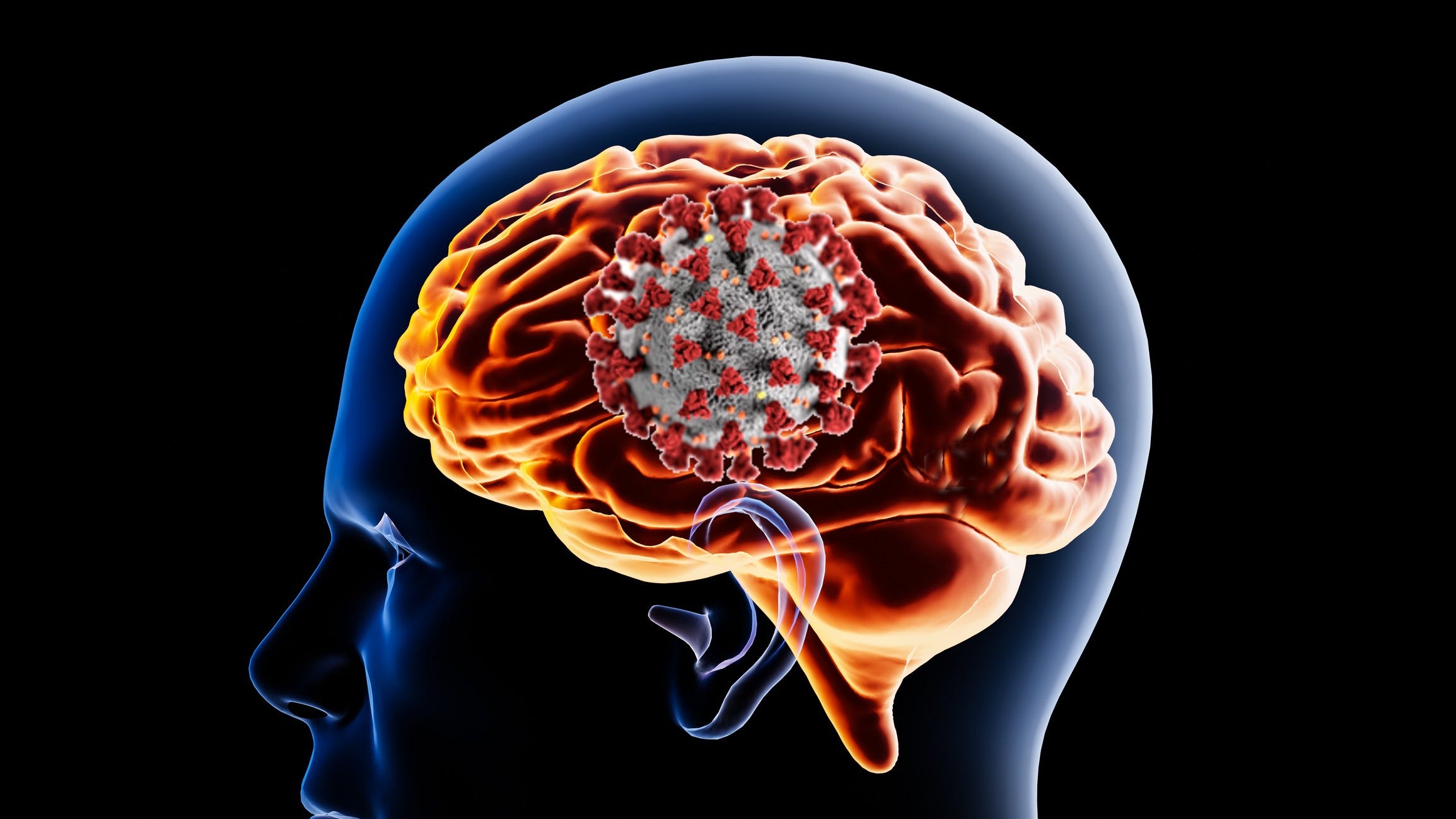
Yeah, so one of the earlier stories I wrote about the pandemic, which was really surprising to me, was in 2022. I interviewed Ziyad Al-Aly, an epidemiologist with the VA health system in St. Louis. And he reported in Nature Medicine that there was an increase in new diagnoses of diabetes after a SARS-CoV-2 infection. And I thought that that was really odd. I think we’re seeing now that the virus, particularly in the early days when people had no immunity from vaccines and no natural immunity, that it could be an accelerant of all kinds of different diseases, from kidney disease to heart disease. And now we’re seeing increasingly its association with with dementia, which is really concerning.
Something that always freaks me out is that it’s so hard to know what’s caused by Covid. Dementia, depression, any mental health issue, stuff with more nebulous symptoms like Chronic Fatigue Syndrome—it’s impossible to pick it all apart and know what’s been caused by the virus.