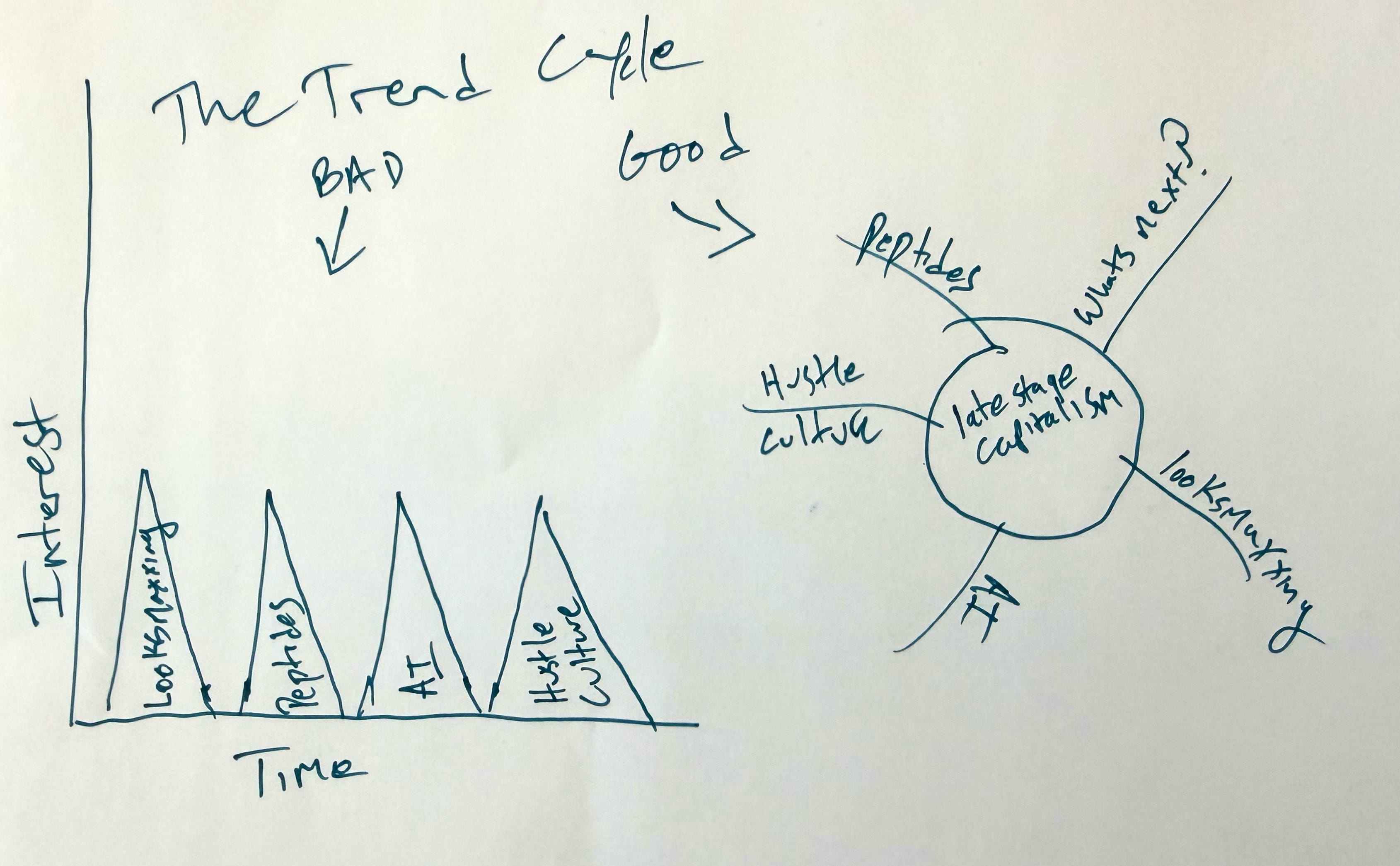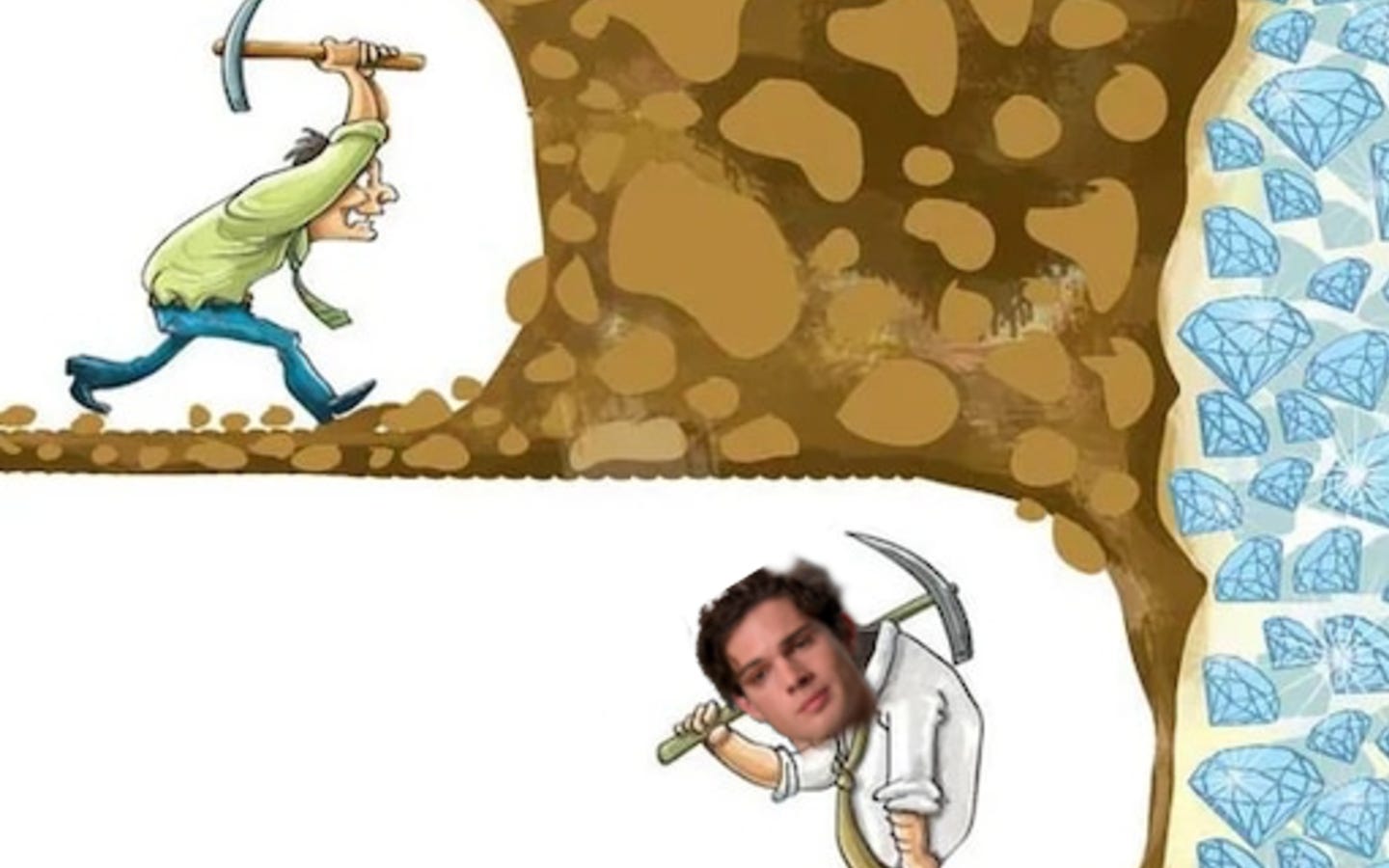
Let me put on my “I’ve been working in the media industry for 15 years” hat for a sec to break down how the trend cycle works in the news. And where better to start than with everyone’s favorite thing to love/hate: looksmaxxing.
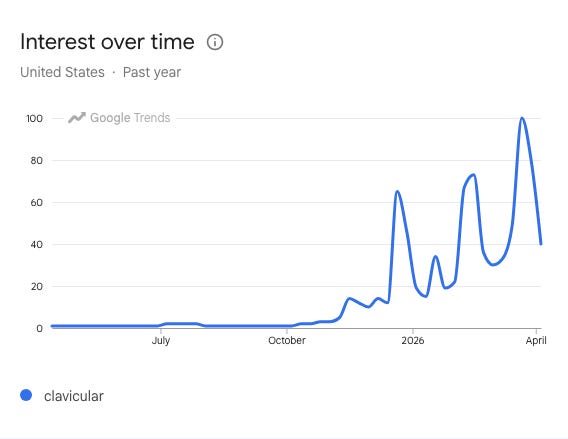
Looksmaxxing discourse followed the same media coverage cycle of so many internet subcultures. After existing in relative obscurity for a few years, in late 2025 a video clip of Clavicular—the most popular of the looksmaxxers—possibly running over someone in his car went viral. The mainstream media found out about him and began writing profiles—first came Vice (hey, maybe they’re still trendsetters after all these years), then the New York Times (which in its typical fashion was neither first nor best), then GQ (which has been doing a lot of actually-great reporting on the toxicity and profiteering of the manosphere (and, which, full disclosure, I sometimes write for)). And then came the commentary, of which I was a part (sorry?). And finally, the death knell of a trend story: broadcast news finally gets around to it.
There’s nothing new about this kind of interest cycle—it’s just how the media works in the internet age. Trends filter up from the netherworlds of small TikTok or Reddit “communities,” then are algorithmically boosted—either by big accounts, or journalists, or profit-seeking actors within those communities who know how to game the algorithm for their own gain, and then they’re covered by bigger and bigger press outlets until people get sick of the discourse and turn to the next thing. In a year, there’ll be a Hulu documentary about Clavicular that is negatively reviewed, mildly popular, and totally forgotten about within a month.
The main problem with this media ecosystem is a lack of connective thinking.
Because the media covers trends in discrete cycles, the trends’ underlying context is often completely unexamined. Media outlets go from trend to trend to trend without revealing (or even themselves knowing) that they’re writing about the same thing over and over again. They’re economically incentivized to do this, because only giving people part of the story keeps them coming back. If they say: “here’s yet another story about how capitalism is ruining everything,” people would have little reason to keep returning. Once you connect the small things into one bigger thing then…poof, they disappear…like a game of Tetris with reversed incentives.
I say all this to say that as of late, it feels like every trend story is really the same trend story, and that story is—say it with me now: as capitalism produces diminishing returns for most people, it also produces a constant flow of new technologies of (supposed) competitive advantage, the sale of which helps capitalists profit by further emptying the coffers of consumers who, in an age of decaying empire, have little else to spend any disposable income on; and, much more importantly, helps distract those same people from the ever-increasing distance between their current position under capitalism and the temporal mirage they’ve created (or which has been created for them by the media) in which they imagine themselves to finally be happy conquerers of the same system currently exploiting them.