

This is part two of a series on fostering your own agency. You can read part one here. There’ll be more parts to come.
My first visit to Dia Beacon was 15 years ago. I went alone on a random weekday. The museum is located in a semi-rural town in upstate New York on the Hudson River. When it opened in 2003, it was one of the first museums to make use of the cavernous space of a shuttered factory—in this case a former Nabisco cookie and biscuit box-printing facility. Brick, steel and concrete, turned into something else. Raw materials repurposed.
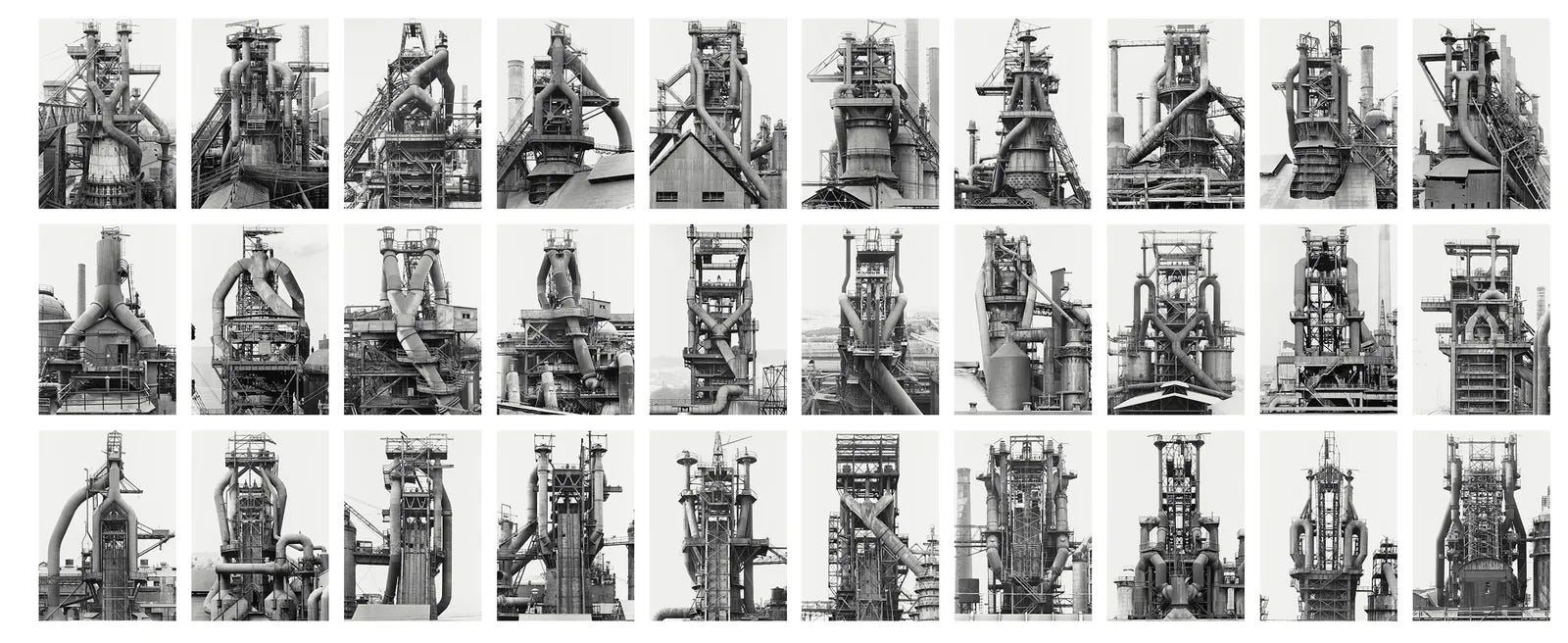
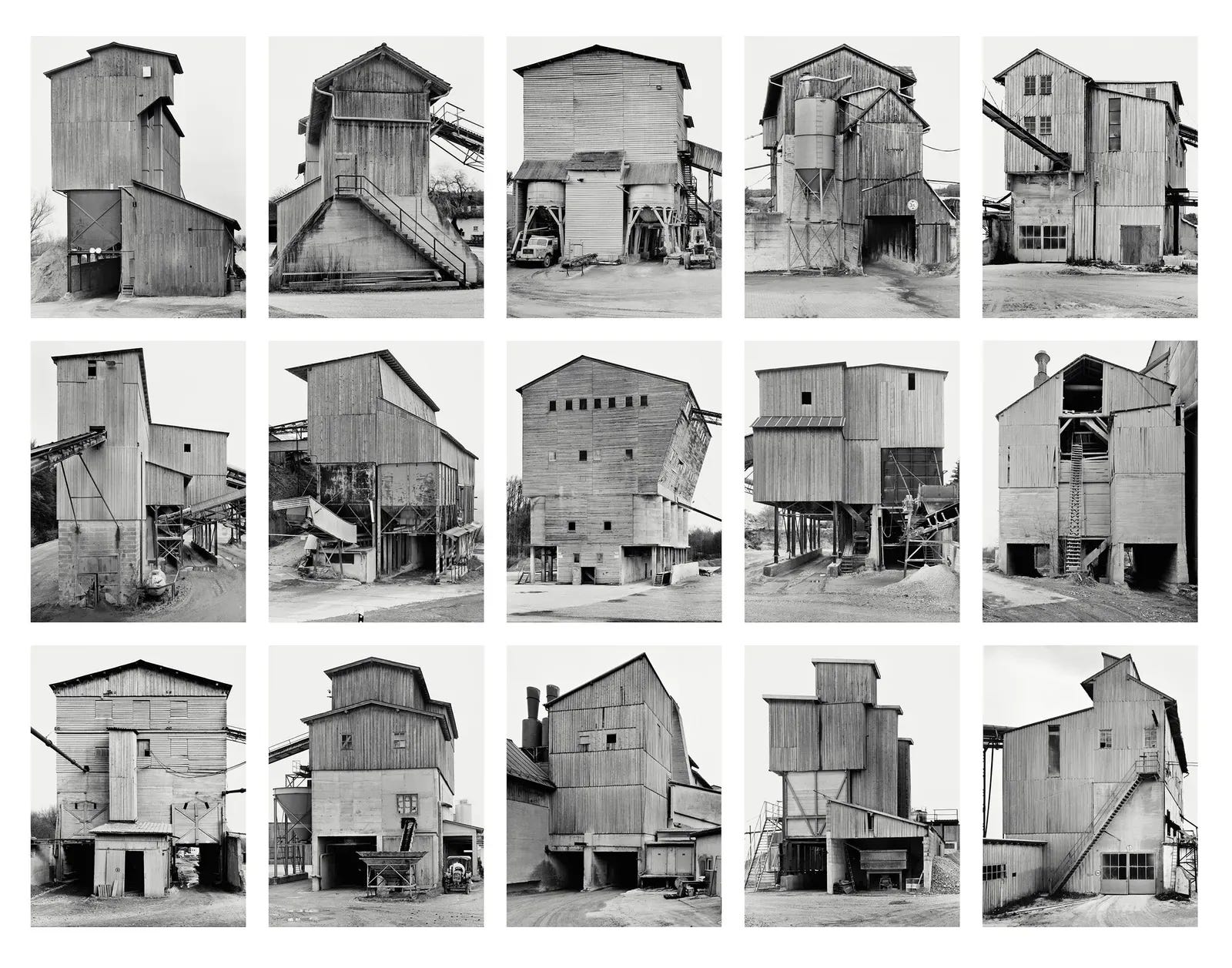
There, I saw two exhibits that stuck with me: Richard Serra’s massive sculptures of metal twisted into relatively simple shapes (but shapes you don’t usually see metal formed into), and Bernd and Hilla Becher’s photographs. Beginning in the 1950s, the husband-and-wife duo traversed Germany taking pictures of industrial stuff—grain elevators, oil refineries, coke ovens. They’d display the photos in grids.
And, for some reason, sitting in a large room alone with these photographs at Dia Beacon that day, they made me cry.
Looking back, I think it’s because these photographs (and, to a lesser extent, the Serra sculptures) made me feel like transformation was possible. These massive and often ugly objects, the building blocks of our violent capitalistic world—steel, brick, concrete—turned into something maybe beautiful. Or sometimes beautiful and sometimes not. But that’s not the point. I wouldn’t describe the Becher’s photographs as beautiful. Their point is just the transformation. To take something overwhelming (which is to say: the objects and tools of capitalism) and turn it into something overwhelmingly different. I thought that was cool. Hopeful, even.
Anyway…to understand what an inner life free from the shackles of capitalism might look like, one in which you are subject not to the whims of your bosses and the systems they create but only, or mostly, to your own desires (whether those desires are only yours as an individual or imbued in you through some kind of idealistic community structure) it might first be helpful to understand what an inner life might look like in which you are most subject to the whims of your bosses and their systems—one in which you are the perfect participant who wouldn’t dare interfere with the machine’s functioning, one in which you are a very well-greased cog; a tiny piece of metal fashioned into a shape that can help this big hulking machine produce nothing of particular use (say, a colorful biscuit box that helps advertise something unhealthy to children) through incredible violence.
One-hundred of 50 or maybe even 20 years ago, to be a well-greased cog was to be the ideal subject of capitalism. You go to work and do not question its societal use; you accept what your boss tells you; you defend the idea that it is good for him to make so much more money than you; you go home and do not make a fuss and do not talk to your fellow man about your shared struggles. That was the proverbial cog.
But we do not live in the cog era of capitalism. Our economic systems have largely done away with the need for our well-oiled workmanship. The machine can now go along without us. Prognosticators love to predict that AI will put us all out of jobs in a decade or so, but in many ways, especially the internal ones, the destruction of our usefulness has already come. To be a cog was not good or fun, but it was at least a use of a human psyche and body, a use that increasingly is unnecessary.
If today’s capitalism can function relatively well whether we participate in it or not, then what we must be taught by our capitalist culture is no longer (just) that we are good boys and girls and theys who must work hard to make a living, but that we might also simply be nothing. There’s no need to beat our souls into the shape of a cog. Capitalism might just prefer that we be dust—a former cog now ground up on the factory floor; steel turned back into iron ore.
The machine—now upgraded and shinier and more automated than ever—has less use for us. And so if we are not one of a decreasing number of cogs needed for the machine (ones that now need 10 years experience and a master’s degree to just get into the machine in the first place), on the floor we sit, specks of dust clumped together and inert.
In the cog era of capitalism, there may have been questions about what one’s agency could be used for—should the cog stay put and just keep turning, or could the cog roll off to its own world and make its own machine, one that wasn’t designed just to produce profits for the factory owner (maybe the cog could join a union or community group and advocating for change)? But today, the idea that we have any power at all, even as little power as contained by one cog out of thousands, feels like wishful thinking.
Indeed, we have been so internally ground to dust that people watch YouTube videos and buy online courses (see: scams) to help turn themselves back into cogs. Maybe if you get a chiseled enough jaw or learn the stock market well enough, you can reenter the machine.
Those of us smarter than that should congratulate ourselves on our unwillingness to be duped back into this apparatus, but that has left us with a problem: What to do now?